The Modern Legal Intranet: Built Around How People Work
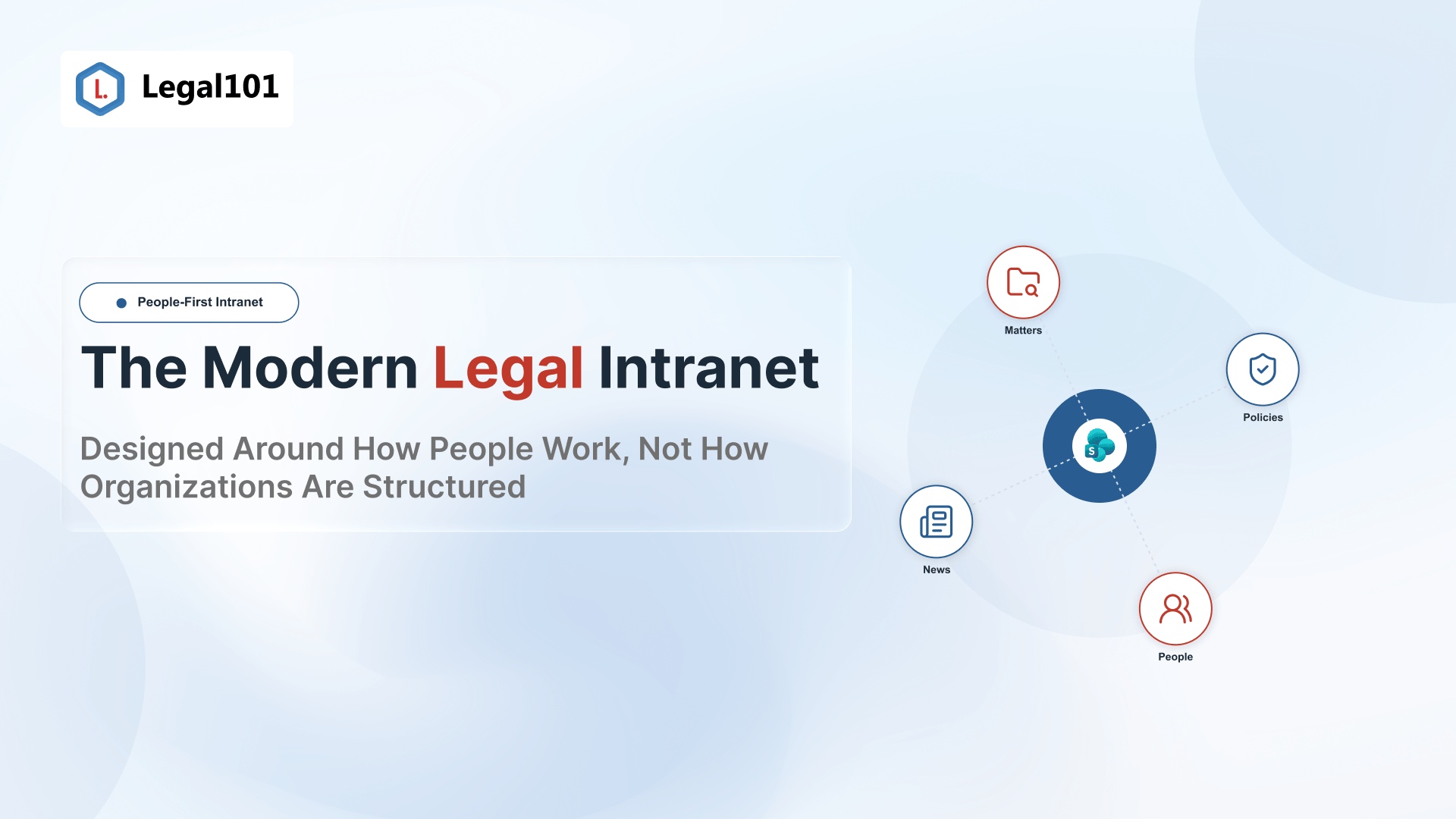
The Modern Legal Intranet: Designed Around How People Work, Not How Organizations Are Structured
Walk into most law firm and legal department intranets and you can read the org chart in the navigation. Practice groups, departments, and committees each get a tab, and finding anything depends on knowing who owns it. That made sense when an intranet was a digital filing cabinet. It makes far less sense now, when the intranet is where work begins.
The org chart is the wrong blueprint
We have come to believe that structuring an intranet around the organization is one of the most common reasons people quietly stop using it. A lawyer preparing for a client meeting does not think in departments. They think about tasks. Find the precedent. Check the policy. See the matter status. Reach the right expert. When a site is organized by who owns content rather than what people need to do, every visit becomes a scavenger hunt. Research consistently shows knowledge workers spend close to a fifth of their week, around nine hours, simply looking for information. In a profession that bills by the hour, that is not a minor inconvenience. It is lost value and lost morale.
Design around how people work
The alternative is to design the intranet around real journeys. That starts with personas. A partner, an associate, a paralegal, a marketing lead, and a member of the finance team each arrive with different goals, and the home page should reflect that rather than greeting everyone with the same wall of links. It continues with context. Legal work is matter-centric, so the intranet should bring matter and client information forward instead of burying it beneath department pages. And it is task-based. The most valuable intranet answers a simple question of need: what am I trying to do right now, and what is the shortest path to done.
Personalization and search as the front door
Two capabilities make this practical. The first is personalization, so that what a person sees is shaped by their role, their practice area, and their current work rather than a one-size-fits-all landing page. The second is search that genuinely works. For most people, search is the front door to the intranet, and modern, well-governed AI-assisted search can turn a long hunt into a direct answer, provided it draws only on trusted, permission-aware content. The goal is not more technology. It is less friction between a question and the answer.
Best practices for a people-first legal intranet
When we help legal teams rethink their intranet, we hold the work to a few principles:
- Start with personas and journeys, not a sitemap. Map the top tasks for each role before drawing a single page.
- Make matter and client context first-class. Surface status, documents, and contacts where people already look.
- Personalize by role and practice. Show each person their world, not everyone's.
- Make search the front door. Invest in fast, permission-aware search, and keep content clean enough to be found.
- Govern the content lifecycle. Assign owners, set review dates, and retire stale pages so trust stays high.
- Design mobile first. Lawyers work from courtrooms, clients' offices, and airports, not only from desks.
- Measure adoption and iterate. Track what people search for and where they give up, then fix it.
A practical picture
Consider a recent effort to modernize a firm's intranet. The old site mirrored the firm's committees and offices, and adoption was low because people could rarely find what they needed on the first try. The new design opened instead with a personalized home page: the matters a person was working on, the policies relevant to their practice, the firm news that mattered to them, and a single prominent search box. Nothing about the firm's structure changed. What changed was the starting point, from where things live to what people need. Usage and satisfaction rose together.
The bottom line
An intranet is not a map of the organization. It is a tool for the people inside it. When we design around how lawyers and legal professionals work, the intranet stops being a place people avoid and becomes the place work begins. That shift, from structure-first to people-first, is one of the most important design decisions a modern legal team can make.
Frequently asked questions
A legal intranet designed around how people work, by role, matter, and task, rather than around the organization's departments, with personalization and strong, permission-aware search.
When navigation mirrors the org chart, people must know who owns content to find it, which turns everyday tasks into searches and gradually drives users away.
It shows each role the matters, policies, and news relevant to them, cutting time spent searching and making the intranet the natural starting point for work.