Law Firm Work Allocation: Make Every Lawyer Findable
How to Fix Uneven Work Allocation in Law Firms
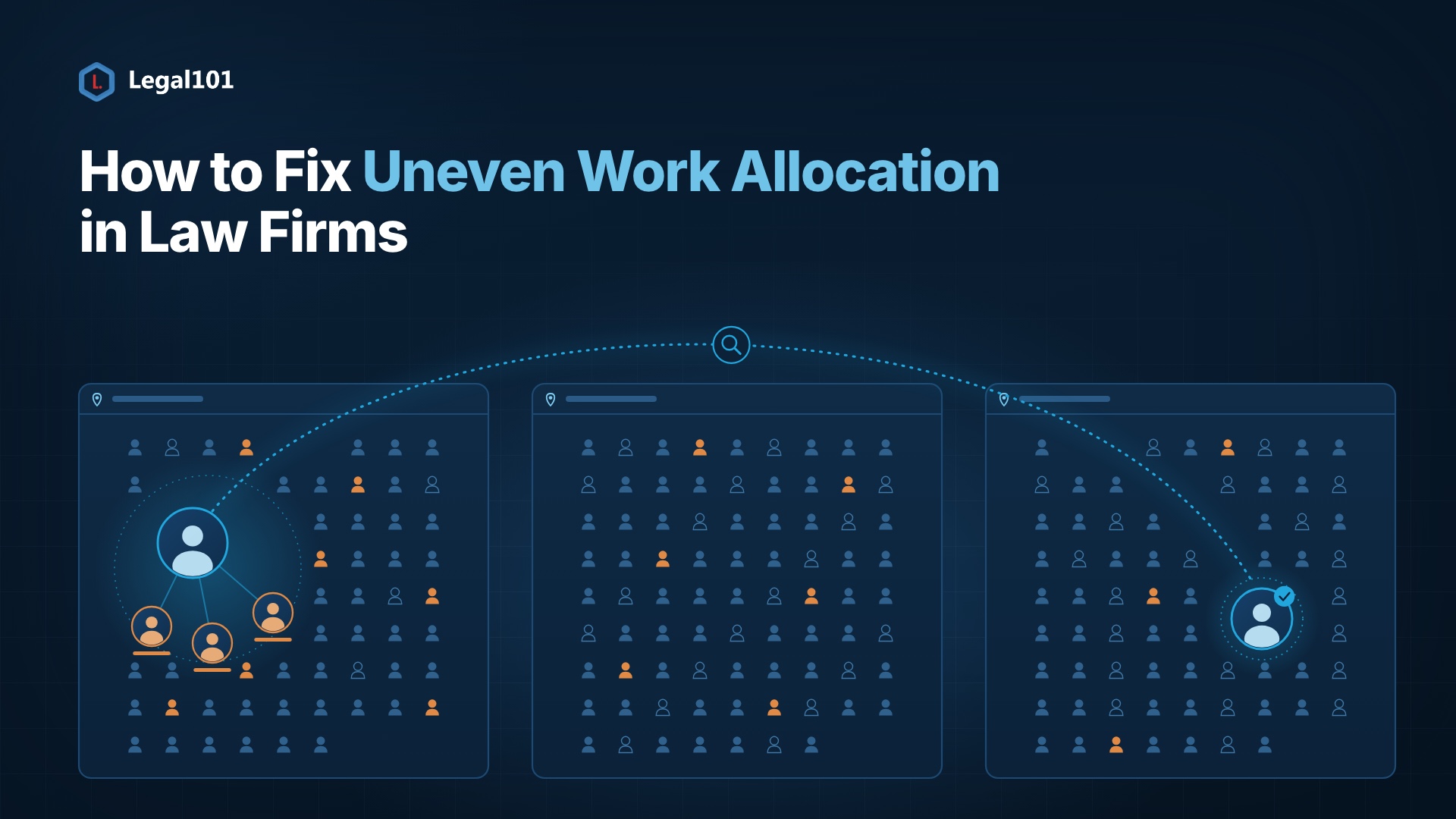
A partner in Chicago knows exactly what her three juniors are working on. She assigns every task herself, and her team runs smoothly.
Then a client calls on Wednesday. They need a cross-border deal team by Friday, with Texas regulatory experience. Her three juniors are full, and none has that background. Who in the firm does? She has no idea. She emails one colleague, who emails another, and two days disappear.
A manager knows their team, but nobody knows the firm.
What Is the Problem? Nobody Can See the Whole Firm
Managing a small team is easy because you can see everything. The trouble starts when the work needs people outside your team. At that point, managers usually can't see:
- Who has the skill. Does anyone in the firm have this specific experience?
- Who has the time. Which associates, in any office, have free hours next week?
- Who is overloaded. One associate may take work from several partners, and each partner sees only their own slice, so nobody sees the total.
- Who is in the right place. Which lawyers hold the right bar for admission or local regulatory knowledge?
So, the work goes to whoever is known, not whoever is best.
Why Does This Happen?
1. The data is scattered. Skills sit in bios, hours in billing systems, and availability in people's heads. BigHand's 2021 research found only 46% of North American firms had data on capacity or utilization, and about 40% could see associate skill sets.
2. Hybrid work removes informal visibility. An Above the Law survey found 61% of firms with 51+ lawyers offer hybrid schedules to all team members. Gensler's 2025 UK study found that associates spend 84% of their time in the office versus 39% for partners. The people assigning work and the people doing it rarely share a room.
3. Habit and preference take over. Partners picking resources based on personal preference remained a challenge for over a third of firms. Trust is quick, and searching is slow, so the familiar name wins.
What Does It Cost?
The work is done. The price shows up elsewhere:
- People. US associate attrition held at 19 to 20% in 2024 and 2025 and replacing a third-year associate exceeds $1 million. Chambers found highly motivated associates fall from 81% to 69% in year two. The overloaded burn out, and the overlooked leave.
- Clients. Urgent requests and pitches need the right team fast, and slow staffing can lose the work.
- Money. Direct spending on lawyer compensation jumped 8.2%, per the 2026 State of the US Legal Market report. Paying more for talent while part of it sits underused is an expensive habit.
How Can Law Firms Fix It? Make Every Lawyer Findable
The fix starts with visibility. Bring lawyer profiles, matter history, office details and time data into one searchable place that every partner and practice leader can use. A partner asks in plain language, for example “who has handled Texas energy regulation and speaks Spanish?”, and gets answers drawn from across the firm, not just from the people she already knows.
McKinsey describes AI-enabled internal talent marketplaces that match open roles with employees who might otherwise be overlooked. The same logic applies to legal staffing. The pressure is real: Microsoft’s 2025 Work Trend Index found 80% of employees and executives lack the time and energy to meet rising expectations. Talent you already employ but can’t see is the cheapest relief available.
What Should You Be Able to Search For?
A useful search covers five things:
- Skills and experience from real work: matters handled, practices and industries, not just bio.
- Jurisdiction and credentials: bar admissions, court affiliations and local knowledge.
- Languages and background: often the details that win a cross-border matter.
- Matter and team history: who has worked together and on what.
- Office and workload signals: where someone sits and how busy their recent time entries suggest they are.
The result is a shortlist in minutes and fewer “who do we know?” emails. Partners also get a clearer view of whose time is stretched and whose is not. Corporate counsel gets the same benefit. Seeing which lawyer, inside or outside, is best placed for a matter.
A Quick Test: Can You Staff It in 48 Hours?
Imagine a client asking for a specialist team by Friday. Without a chain of phone calls, can you say:
- Who has the right skills?
- Who has the capacity?
- Who holds the right jurisdiction?
If not, you have a visibility problem, not a talent problem.
Your three juniors are in good hands. The question is about the other 197. The firms that pull ahead will be the ones that can find the right person in minutes, wherever she sits.
Frequently asked questions
Why do law firms struggle with work allocation?
Partners see their own team clearly but not the skills and capacity elsewhere in the firm, so they default to people they know.
How does hybrid work affect law firm staffing?
It reduces informal visibility, so workload imbalances and available talent are harder to spot.
How can a law firm staff a team across offices?
By making availability, skills and jurisdiction searchable firm-wide, then tracking how evenly work is distributed.
Sources
- Above the Law, Remote Work Seems Here To Stay (2025)
- Gensler, UK Legal Workplace Survey 2025
- Chambers, State of the US Legal Talent Market 2026
- Sartori Global, Legal hiring market
- Thomson Reuters, 2026 State of the US Legal Market
- McKinsey, Stave off attrition with an internal talent marketplace
- Microsoft, 2025 Work Trend Index coverage
- Artificial Lawyer, BigHand 2021 resource report
- British Legal IT Forum, BigHand Legal Resource Management Report